
Acne
Book Appointment
ACNE
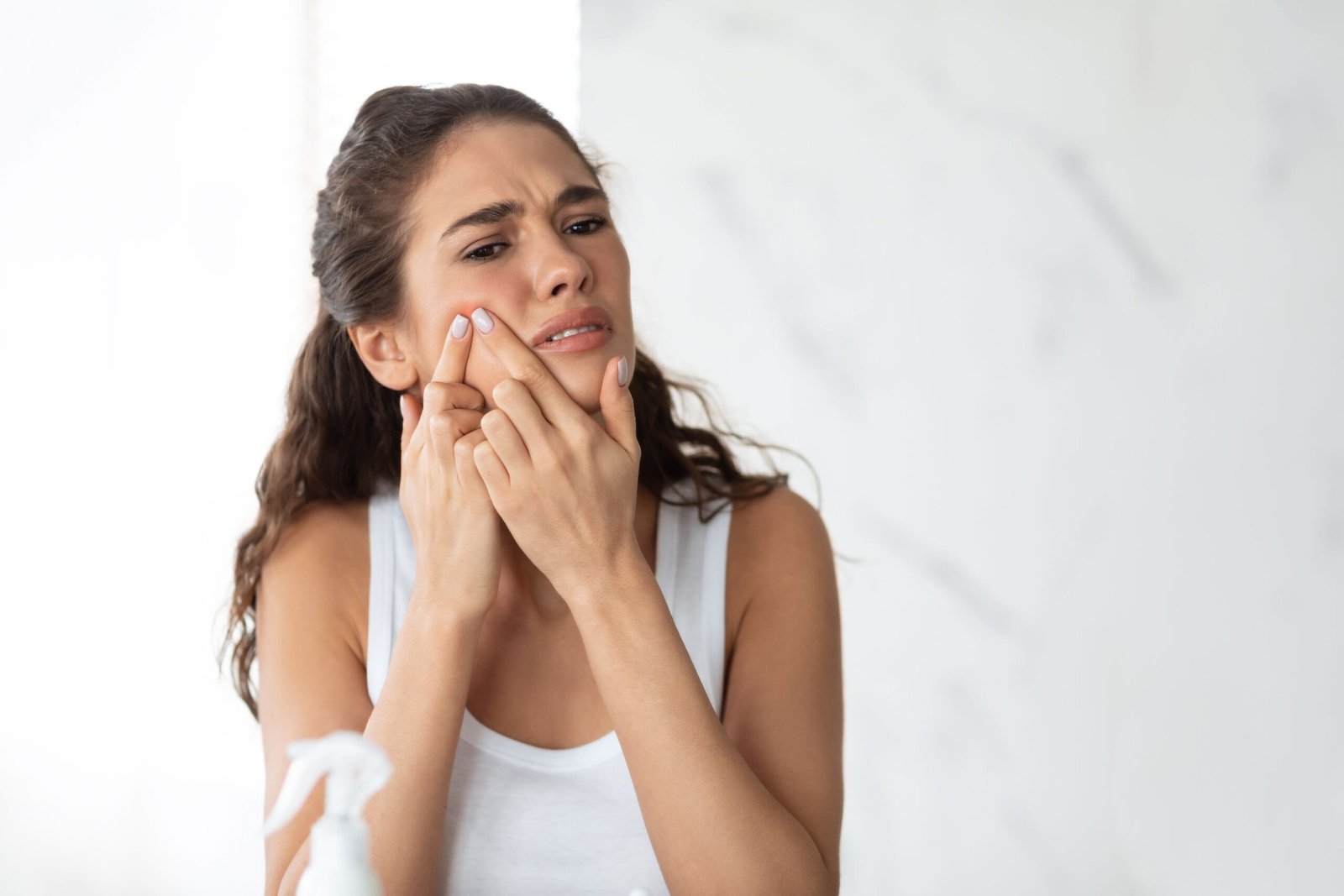
Acne is a skin condition that causes pimples or “zits.” Whiteheads, blackheads, and red, inflamed patches of skin (such as cysts) may develop.
Causes
Acne occurs when tiny holes on the surface of the skin become clogged. These holes are called pores.
- Each pore opens to a follicle. A follicle contains a hair and an oil gland. The oil released by the gland helps remove old skin cells and keeps your skin soft.
- The glands can become blocked with a mixture or oil and skin cells, the blockage is called a plug or comedone. If the top of the plug is white, it is called a whitehead. It is called a blackhead if the top of the plug is dark.
- If bacteria become trapped in the plug, the body’s immune system may react to it, causing pimples.
- Acne that is deep in your skin can cause hard, painful cysts. This is called nodulocystic acne.
- Acne is most common in teenagers, but anyone can get acne, even babies. The problem tends to run in families.
Some things that may trigger acne include:
- Hormonal changes that make the skin oilier. These may be related to puberty, menstrual periods, pregnancy, birth control pills, or stress.
- Greasy or oily cosmetic and hair products.
- Certain drugs (such as steroids, testosterone, estrogen, and phenytoin). Birth control devices, such as some drug-containing IUDs, can make acne worse.
- Heavy sweating and humidity.
- Excessively touching, resting on, or rubbing the skin.
Symptoms
Acne commonly appears on the face and shoulders. It may also occur on the trunk, arms, legs, and buttocks. Skin changes include:
- Crusting of skin bumps
- Cysts
- Papules (small red bumps)
- Pustules (small red bumps containing white or yellow pus)
- Redness around the skin eruptions
- Scarring of the skin
- Whiteheads
- Blackheads
Depending on severity the doctor may suggest one of the following modalities of treatment.
Topical:
- Antibiotics: reduce acne by reducing the bacterial overgrowth
- Retinoids: help reduce excess oil production, prevent blocking of oil gland pores
- Salicylic acid, azelaic acid, benzoyl peroxide: antibacterial and reduce oil gland activity.
Systemic/Oral:
Moderate to severe cases of acne may require prescribing oral medication.
- Antibiotics
- Isotretinoin
- Oral contraceptives
- Oral antiandrogens
Adjuvant therapies:
Done as an add-on in cases where acne fail to respond to topical and systemic therapies. Adjuvant therapies reduce the symptoms and after effects such as pigmentation and scarring.
- Chemical peel
- Lasers
- Comedone extraction
Our Most Popular Services
Our mission is to deliver the best in class, genuine and affordable dermatology care for the entire family delivered in the most personalized fashion using world-class technology.